
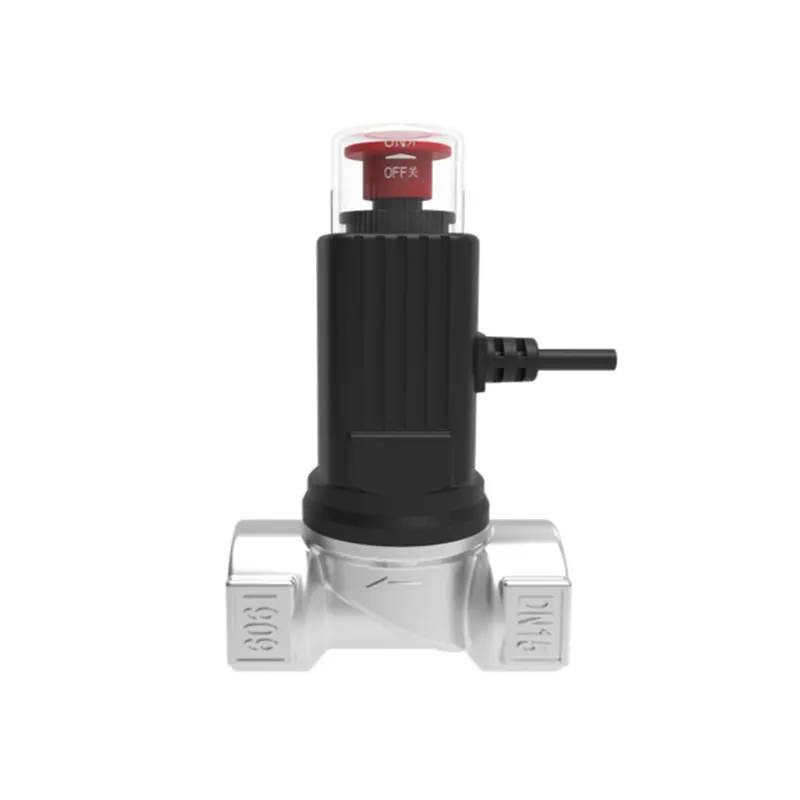
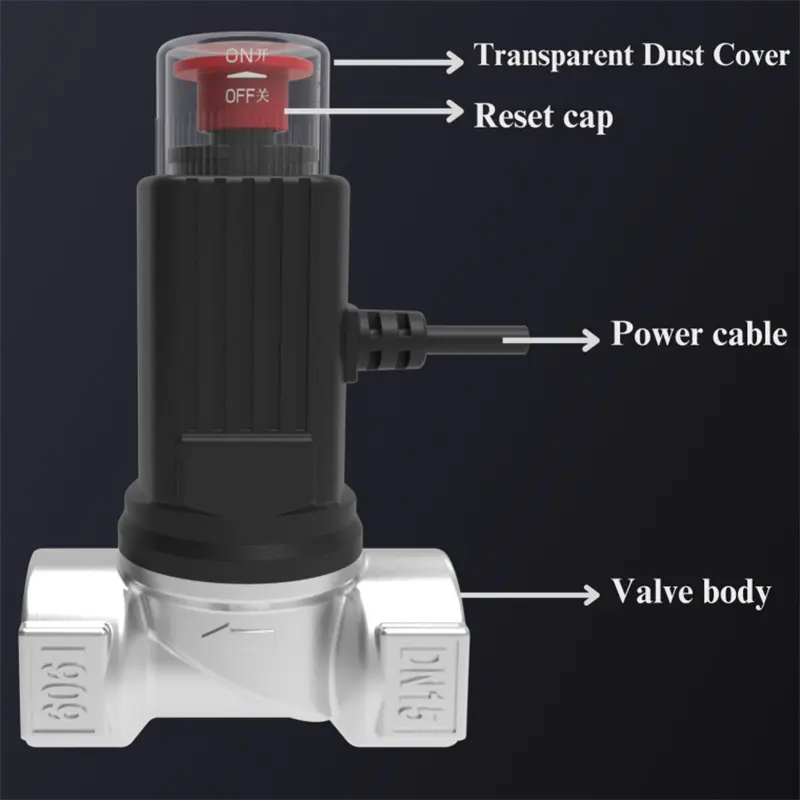
OEM China Aluminum Alloy Electromagnetic Shut-off Valve Manufacturer - JYFJS-011 Series Suppliers & Factory Supplier, Factories
Product Description
Working Principle and Structural Diagram
Structure and Components
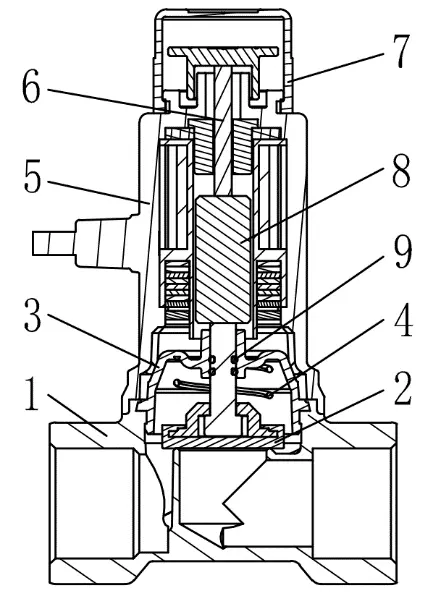
| Serial Number | Area Name |
|---|---|
| 1 | Valve body |
| 2 | Diaphragm |
| 3 | Valve cover |
| 4 | Spring |
| 5 | Actuator |
| 6 | Reset Device |
| 7 | Dust cover |
| 8 | Moving iron core |
| 9 | Sealing ring |
Frequently Asked Questions
How does the valve operate under normal conditions?
Under normal operation, the valve functions in a normally open shut-off mode. It remains open without requiring any power supply, ensuring continuous gas flow.
What happens when a gas leakage accident is detected?
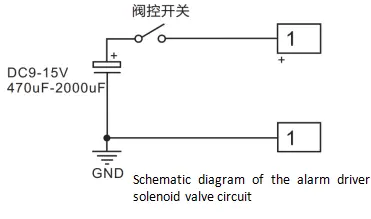
When a leak occurs, the connected alarm system triggers an alert and instantly delivers a DC pulse voltage to the solenoid valve. This energizes the coil, causing the valve to close rapidly, cut off the gas supply, and enter a self-locking state.
How long does the electrical pulse last during a leak event?
During a gas leak, the alarm's capacitor continuously releases a 3-second DC pulse voltage to energize the coil, ensuring the valve is securely closed.
Can the valve be opened automatically after it has closed?
No, once the valve is closed and enters the self-locking state, it must be manually opened. However, if it receives another shut-off signal after being manually opened, it will automatically close again.
What forces are combined to control the valve's self-holding functions?
The valve achieves its pulse drive, automatic closing, and manual opening self-holding functions through the interaction of the coil's instantaneous electromagnetic force, permanent magnetic force, and spring force.









