
1 / 2
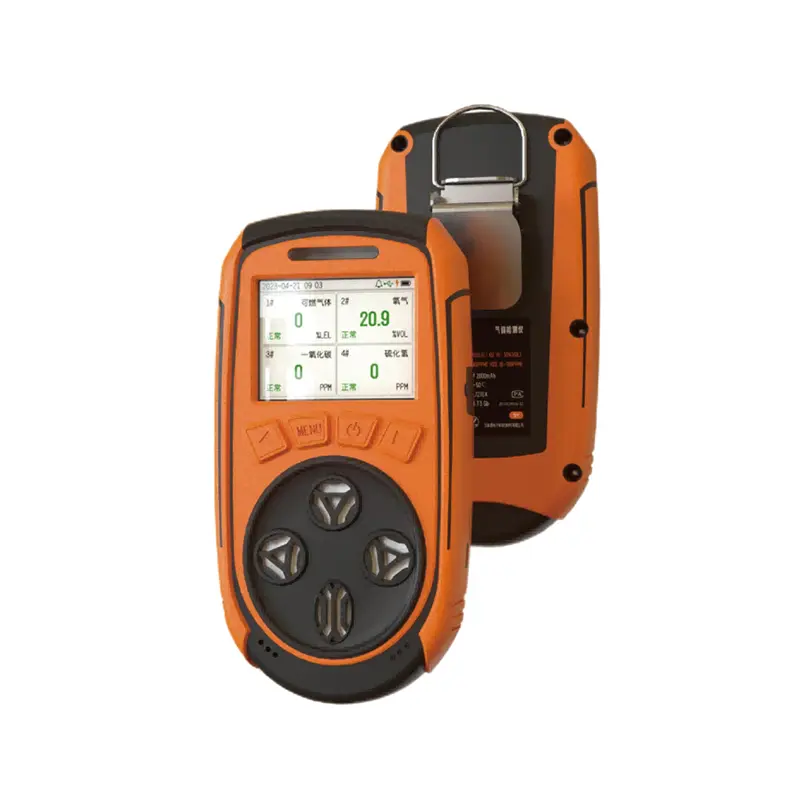
High-Quality 4 in 1 Portable Gas Detector Shield BTYQ-Z4 Series - Reliable China Suppliers and Factory Solution for Safety Monitoring Manufacturer, Factory
Product Description
Structure and Function Comparison Table
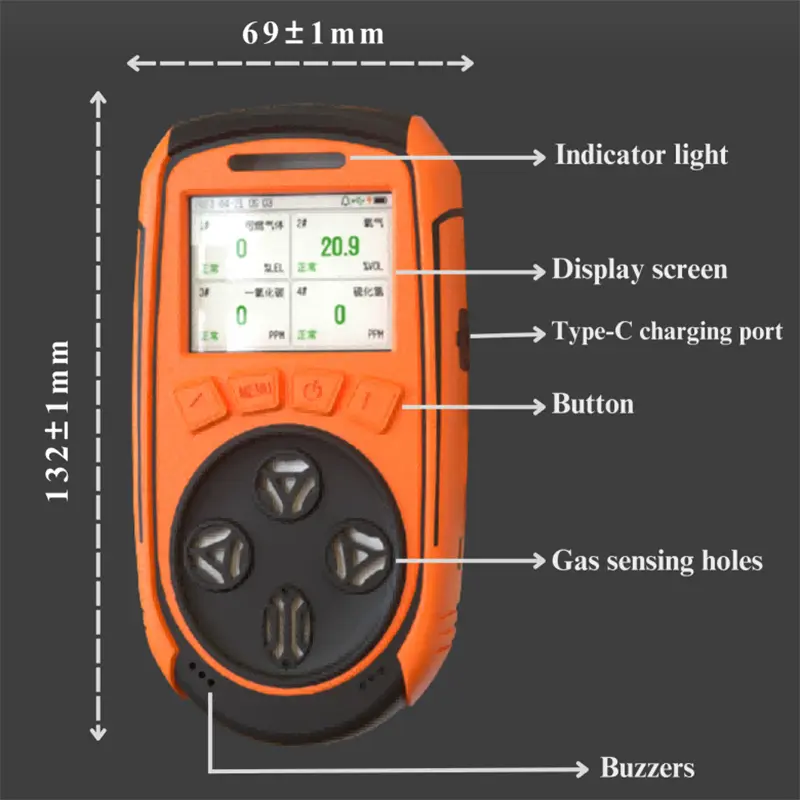
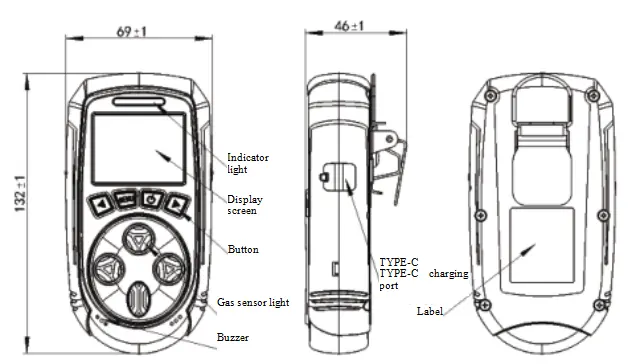
The appearance and structure of the equipment are shown in the following diagram:
-
🔘
The device has four buttons: left, menu, power, and right.
-
💡
The device has three indicator lights: normal, alarm, and fault indicators.
Leak Detector Structure
The device mainly consists of components such as the casing, circuit board, battery, display screen, and sensors.
🔲
Casing
Protective outer shell for the device
🔌
Circuit Board
Core electronic processing unit
🔋
Battery
Power supply for portable operation
🖥️
Display Screen
Real-time data visualization interface
📡
Sensors
Gas detection sensing elements
Working Principle
The detector operates based on two core detection technologies:
⚗️
Electrochemical Type
Detects gas concentration through electrochemical reactions, ideal for toxic gas monitoring.
🔥
Catalytic Combustion Type
Detects flammable gases by measuring heat produced during catalytic oxidation.
Frequently Asked Questions
Q
What are the main components of the BTYQ-SD3011 leak detector?
The device mainly consists of a casing, circuit board, battery, display screen, and sensors, all working together to provide accurate gas leak detection.
Q
How many buttons does the BTYQ-SD3011 have and what are their functions?
The device features four buttons: left, menu, power, and right, allowing users to navigate settings and operate the device efficiently.
Q
What do the three indicator lights on the device represent?
The three indicator lights represent normal operation, alarm status, and fault conditions, providing instant visual feedback on the device's working state.
Q
What is the difference between electrochemical and catalytic combustion detection?
Electrochemical detection is primarily used for toxic gas monitoring through chemical reactions, while catalytic combustion detection identifies flammable gases by measuring heat generated during oxidation on a catalytic surface.
Q
What types of gases can the BTYQ-SD3011 detect?
Thanks to its dual working principles — electrochemical and catalytic combustion — the device can detect both toxic gases and flammable gases, making it suitable for a wide range of industrial and safety applications.
Q
Is the BTYQ-SD3011 portable and battery-operated?
Yes, the device includes a built-in battery as one of its core components, enabling portable and flexible use across various environments without requiring a fixed power source.









