
1 / 2
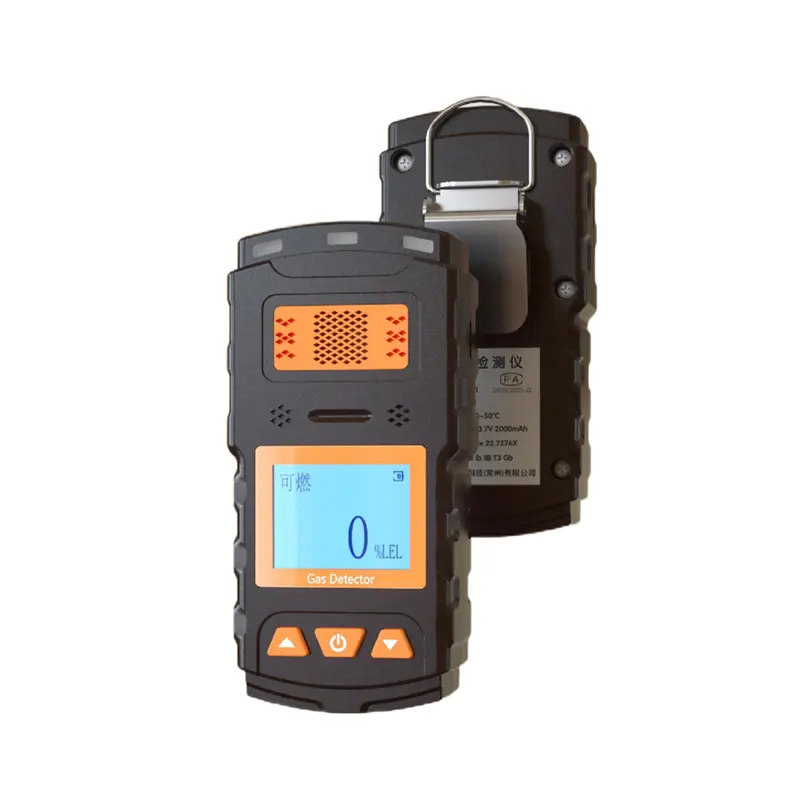
ODM Portable Gas Detector SD3001 Series - China Suppliers & Factory for Industrial Safety Monitoring Manufacturer, Supplier
Product Description
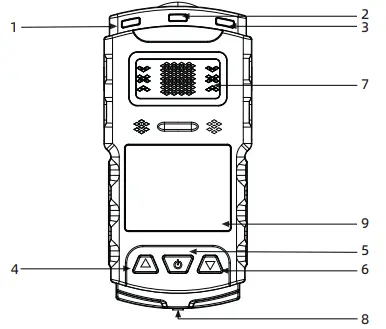
Structure and Function Comparison Table
| Serial Number | Area Name |
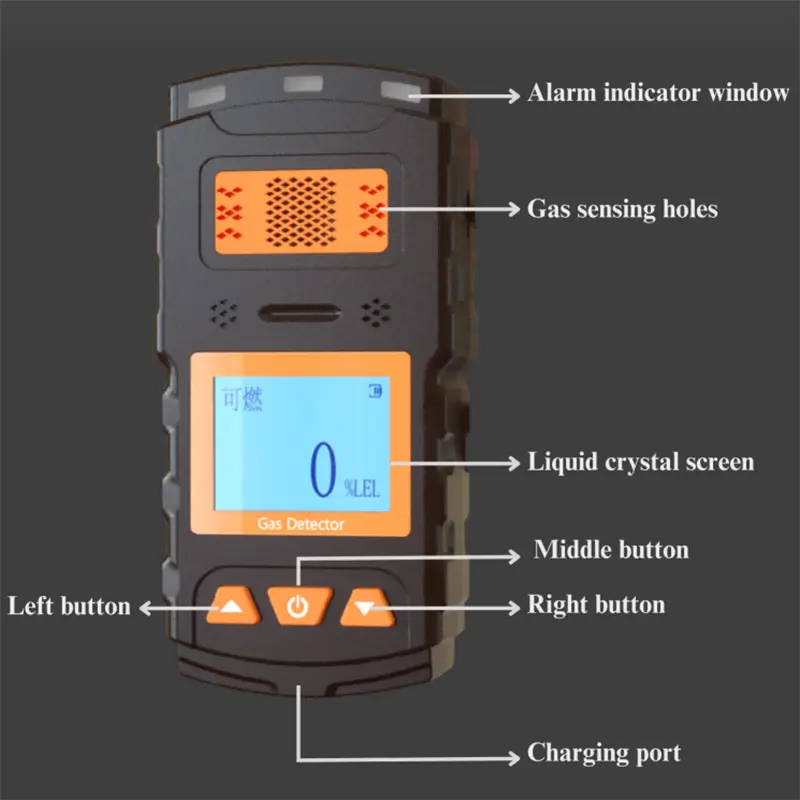
| 1, 2, 3 | Alarm indicator light window |
| 4 | Left click |
| 5 | Middle button |
| 6 | Right-click |
| 7 | Gas sensing hole |
| 8 | Charging port |
| 9 | LCD screen |
Structure of the Detector
The main components are the shell, circuit board, battery, display screen, sensor, and charger.
Working Principle
Electrochemical type and catalytic combustion type.
Frequently Asked Questions
Q
What are the main structural components of the BTYQ-SD3001 detector?
The BTYQ-SD3001 detector is composed of several key components including the shell, circuit board, battery, display screen, sensor, and charger. Each part plays a critical role in ensuring accurate and reliable gas detection performance.
Q
What working principles does the BTYQ-SD3001 detector use?
The detector utilizes two working principles: electrochemical type and catalytic combustion type. These technologies enable the device to detect a wide range of gases with high sensitivity and accuracy.
Q
What is the function of the alarm indicator light window (areas 1, 2, 3)?
The three alarm indicator light windows provide visual alerts when the detector senses gas levels that exceed safe thresholds. They offer clear, immediate visual notification to the user about potential hazards.
Q
How is the BTYQ-SD3001 detector charged?
The device features a dedicated charging port (area 8) that allows convenient recharging of the internal battery. The built-in battery ensures portability and continuous use in the field without dependency on external power sources.
Q
What information is displayed on the LCD screen (area 9)?
The LCD screen displays real-time gas concentration readings, device status, and other relevant measurement data. It provides users with clear and easy-to-read information during operation.
Q
What is the role of the gas sensing hole (area 7)?
The gas sensing hole is the entry point through which ambient air reaches the internal sensor. It allows the detector to continuously sample the surrounding environment and measure gas concentrations in real time, ensuring prompt and accurate detection.









