
1 / 2
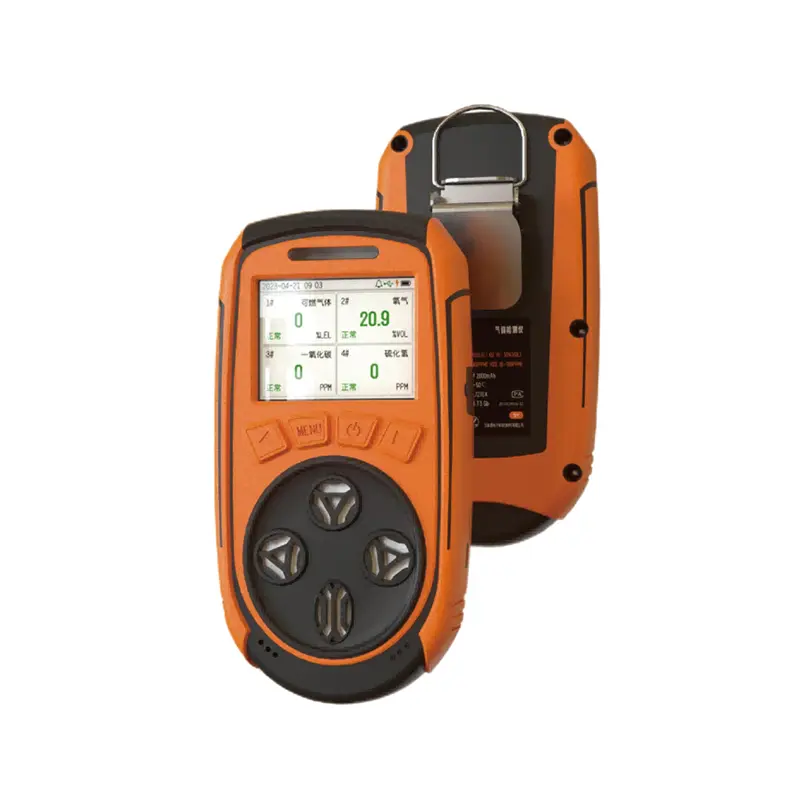
ODM 4 in 1 Portable Gas Detector BTYQ-Z4 Series - China Suppliers and Factory for Industrial Safety Monitoring Supplier, Suppliers
Product Description
Structure and Function Comparison Table
The appearance and structure of the equipment are shown in the following diagram:
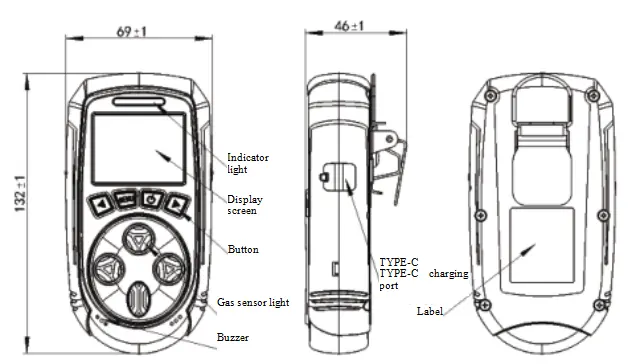
BTYQ-SD3011 — Device Appearance & Structure Diagram
-
🔘
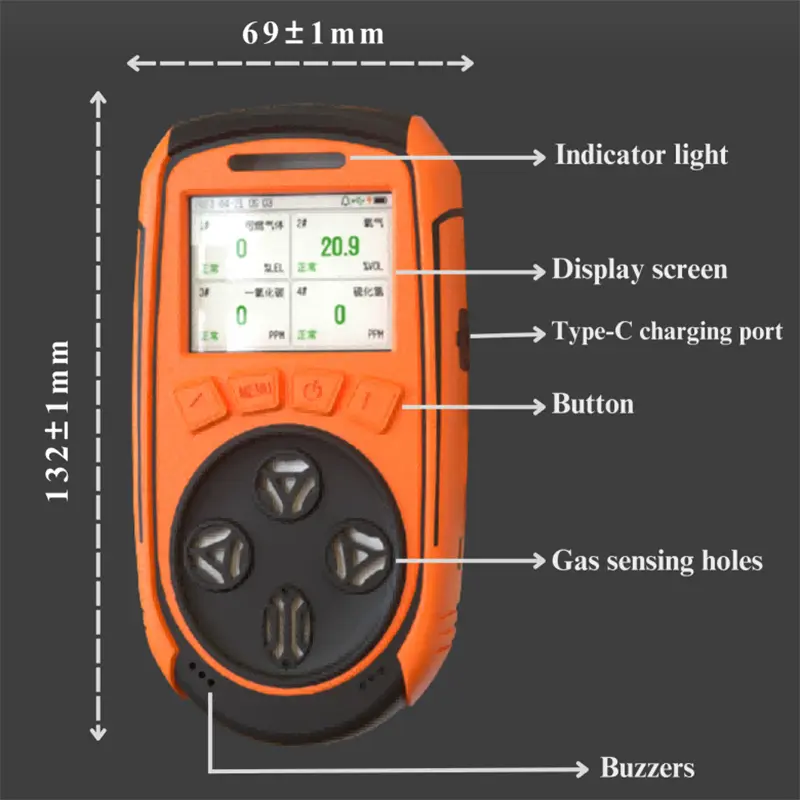
The device has four buttons: Left, Menu, Power, and Right.
-
💡
The device has three indicator lights: Normal, Alarm, and Fault indicators.
Leak Detector Structure
The device mainly consists of the following key components:
🔲
Casing
Durable outer shell providing protection and structural support for internal components.
🖥️
Display Screen
Shows real-time readings, status, and alert information for easy monitoring.
🔋
Battery
Powers the device for portable and continuous field operation.
🔌
Circuit Board
Core electronics responsible for signal processing, data management, and control logic.
🔬
Sensors
Detect gas leaks with high sensitivity using advanced sensing technology.
Working Principle
⚗️
Electrochemical Type
Detects gas concentration through chemical reactions that generate a measurable electrical signal, ideal for toxic gas detection.
🔥
Catalytic Combustion Type
Measures combustible gas concentration via catalytic oxidation, producing a resistance change proportional to gas levels.
Frequently Asked Questions
❓
What buttons does the BTYQ-SD3011 leak detector have?
The device is equipped with four buttons: Left, Menu, Power, and Right. These allow users to navigate menus, power the device on/off, and adjust settings easily.
❓
What do the three indicator lights on the device represent?
The three indicator lights represent Normal operation status, Alarm condition (gas detected above threshold), and Fault status (device malfunction or sensor error).
❓
What are the main structural components of the leak detector?
The leak detector mainly consists of five key components: the casing, circuit board, battery, display screen, and sensors. Each plays a critical role in the device's operation and durability.
❓
What working principles does the leak detector use?
The device supports two detection principles: Electrochemical type, which is suitable for detecting toxic gases, and Catalytic Combustion type, which is designed for detecting combustible gases. The appropriate type is selected based on the application scenario.
❓
What is the difference between electrochemical and catalytic combustion detection?
Electrochemical sensors detect gas by measuring electrical signals generated by chemical reactions — ideal for toxic gases like CO or H₂S. Catalytic combustion sensors detect flammable gases such as methane by measuring the heat produced during controlled oxidation on a catalytic bead.
❓
Is the BTYQ-SD3011 suitable for portable field use?
Yes, the BTYQ-SD3011 is designed for portability. Its built-in battery, compact casing, and intuitive button controls make it well-suited for on-site inspections and continuous field monitoring in various industrial environments.









