
1 / 2
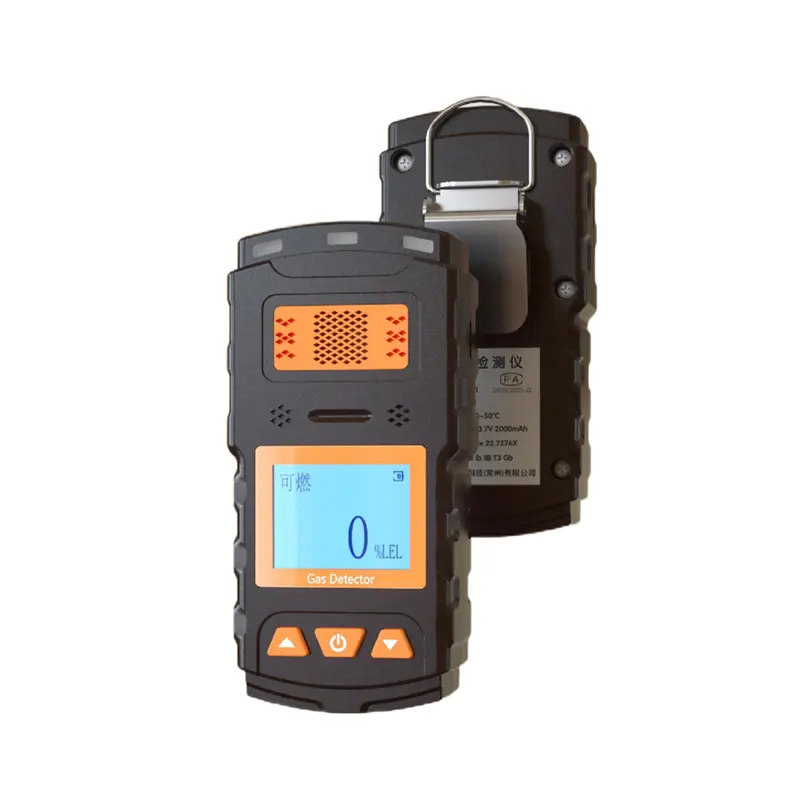
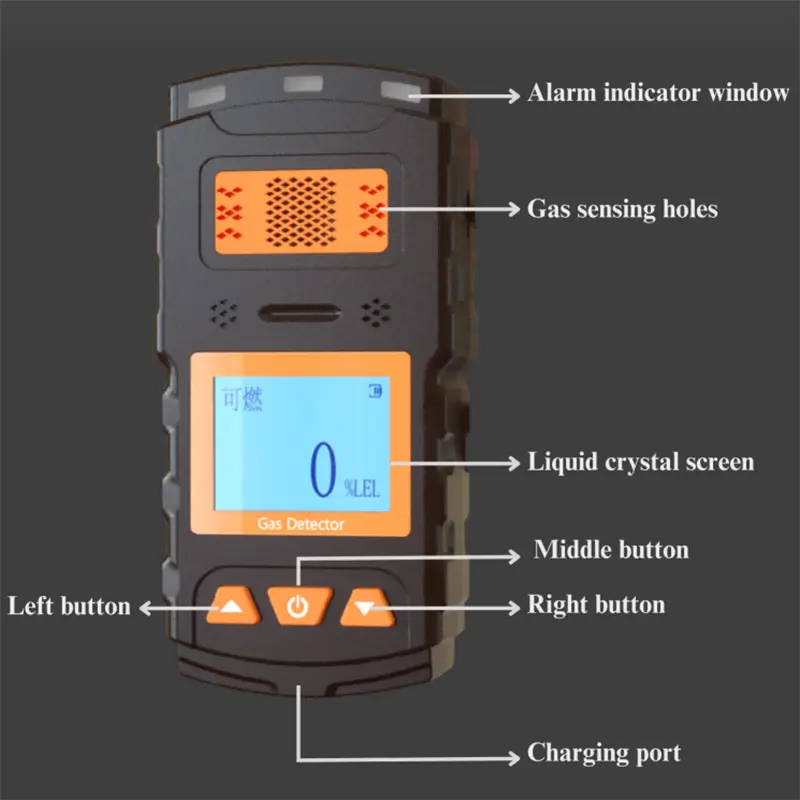
High-Quality China SD3001 Portable Gas Detector - High-Sensitivity Safety Monitoring by Reliable Suppliers and Factory Suppliers, Factory
Product Description
Structure and Function Comparison Table
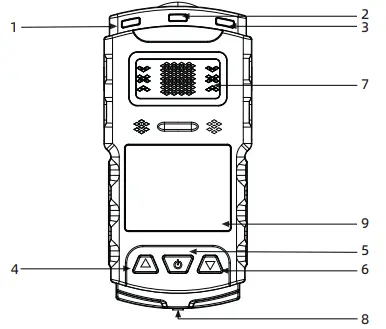
| Serial Number | Area Name |
| 1, 2, 3 | Alarm indicator light window |
| 4 | Left click |
| 5 | Middle button |
| 6 | Right-click |
| 7 | Gas sensing hole |
| 8 | Charging port |
| 9 | LCD screen |
🔩
Structure of the Detector
The main components are the shell, circuit board, battery, display screen, sensor, and charger.
⚙️
Working Principle
Electrochemical type and catalytic combustion type.
Frequently Asked Questions
Q
What are the main structural components of the BTYQ-SD3001 detector?
The main components include the shell, circuit board, battery, display screen (LCD), sensor, and charger. These parts work together to ensure reliable gas detection and user operation.
Q
What is the working principle of the detector?
The detector uses two main detection technologies: electrochemical type and catalytic combustion type. These principles enable accurate and sensitive detection of various target gases.
Q
What does the alarm indicator light window (areas 1, 2, 3) indicate?
The alarm indicator light windows are used to visually alert the user when gas concentration reaches a warning or danger threshold. Multiple indicator windows ensure the alarm is visible from different angles.
Q
What is the function of the gas sensing hole (area 7)?
The gas sensing hole allows ambient air and gas to enter the sensor chamber, enabling the internal sensor to detect and measure gas concentration levels accurately in real time.
Q
How is the BTYQ-SD3001 detector charged?
The device is equipped with a dedicated charging port (area 8), allowing it to be recharged conveniently. The built-in battery ensures the device can be used portably in various field environments.
Q
What information is displayed on the LCD screen (area 9)?
The LCD screen displays key real-time information such as current gas concentration readings, battery status, alarm levels, and other operational parameters to help users monitor detection results clearly.









